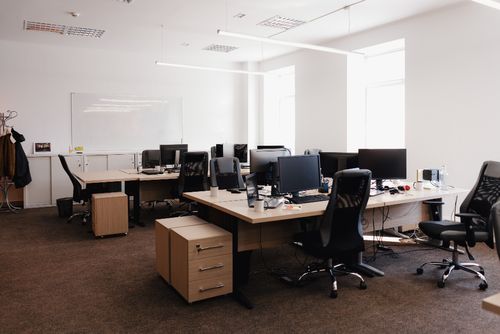
Messy workspace = lower productivity
Cluttered desks, dusty touchpoints and overflowing bins distract teams and make it harder to stay focused through the day.
Protect employee experience and visitor first impressions with documented scope, inspections, continuity where practical, and a clear escalation path—so you are not the person explaining why the office looks tired.
Built for busy workplaces
Focus
Cleaner desks
Supports a tidier, more productive workday.
People
Better morale
Teams notice when their office feels cared for.
Brand
Stronger impressions
Visitors walk into a workplace that feels organised.
Inspection-first approach
We start with your office layout, shared areas and amenities, then recommend a scope that matches how your team actually uses the space.
Problem
When office cleaning slips, teams feel it immediately. Productivity drops, staff lose confidence in the workplace, and clients notice the wrong details.
Cluttered desks, dusty touchpoints and overflowing bins distract teams and make it harder to stay focused through the day.
If kitchens, desks and amenities feel neglected, your team notices quickly and the workplace stops feeling cared for.
Clients, candidates and visitors make fast judgments. A poorly maintained office can undermine trust before meetings even start.
Solution
The right office cleaning plan protects more than presentation. It helps your team stay focused, keeps shared spaces under control and gives every visitor a better first impression.
What this page is built to convert
Melbourne businesses looking for dependable recurring office cleaning, a smoother inspection experience and a faster path to a tailored scope.
Workstations, touchpoints and shared surfaces are cleaned to help your office feel sharper and more professional every day.
General waste and recycling are handled consistently so your office stays presentable instead of building up between visits.
Amenities are sanitised, refreshed and checked carefully because bathrooms are one of the fastest ways people judge workplace standards.
See what a better office cleaning scope could look like for your Melbourne workplace. We’ll review your space and recommend a practical next step.
FAQs
Yes. This page is built for Melbourne office cleaning services enquiries—CBD, Southbank, Docklands, Richmond and metro business parks—with scopes sized to your footprint, hybrid occupancy and visitor routes.
Yes. We can structure office cleaning around before-hours, after-hours or quieter operating windows, with clear access, key and alarm protocols so facilities teams are not left managing risk alone.
Typical scopes can include desk and touchpoint cleaning, bin management, restroom sanitation, kitchen and breakout cleaning, vacuuming, mopping and high-touch shared surfaces. The important part is what is excluded too—so finance and workplace leads see the same document.
We prioritise visitor routes, meeting suites and amenities alongside desks, because that is where perception is won or lost. Programs combine stable routines, periodic detailing for glass and dust-prone areas, and quick escalation when something needs a same-day touch-up before a VIP visit.
Anti-decay controls matter: agreed task lists, inspection cadence, logging for recurring issues, and continuity where practical so crews learn your building. If standards slip, your commercial contact owns the corrective plan—not an anonymous inbox.
Where schedules allow, we aim for same-team continuity for site knowledge and trust after hours. We also roster backup cover for leave and peaks so you are not left short.
We align on lightweight proof: completion notes, agreed photo checkpoints, or periodic inspection summaries—whatever helps workplace and facilities leads evidence service without admin overhead.
Planning commercial cleaning for a workplace in Melbourne’s west? Choose the service that fits your site, then send your suburb, facility type, floor area, preferred frequency and access requirements. We confirm availability, timing and the written scope for each enquiry before work is agreed.
Discuss floors, loading areas, staff amenities and safe access around operations.
Plan workstations, shared kitchens, bathrooms and cleaning around occupancy.
Discuss treatment rooms, touchpoints and site-specific hygiene requirements.
We use essential cookies so the site works. Where you allow it, we also use analytics or marketing tools to understand how the site is used and to measure campaigns. You can change your choice anytime via Cookie preferences in the footer. See our Privacy Policy for details.