Most offices do not suddenly become “dirty” overnight. Standards drift. A skipped touchpoint clean here, a rushed bathroom reset there, and within a few weeks the workplace still looks acceptable to the team—but it stops feeling polished to clients, candidates, and visitors.
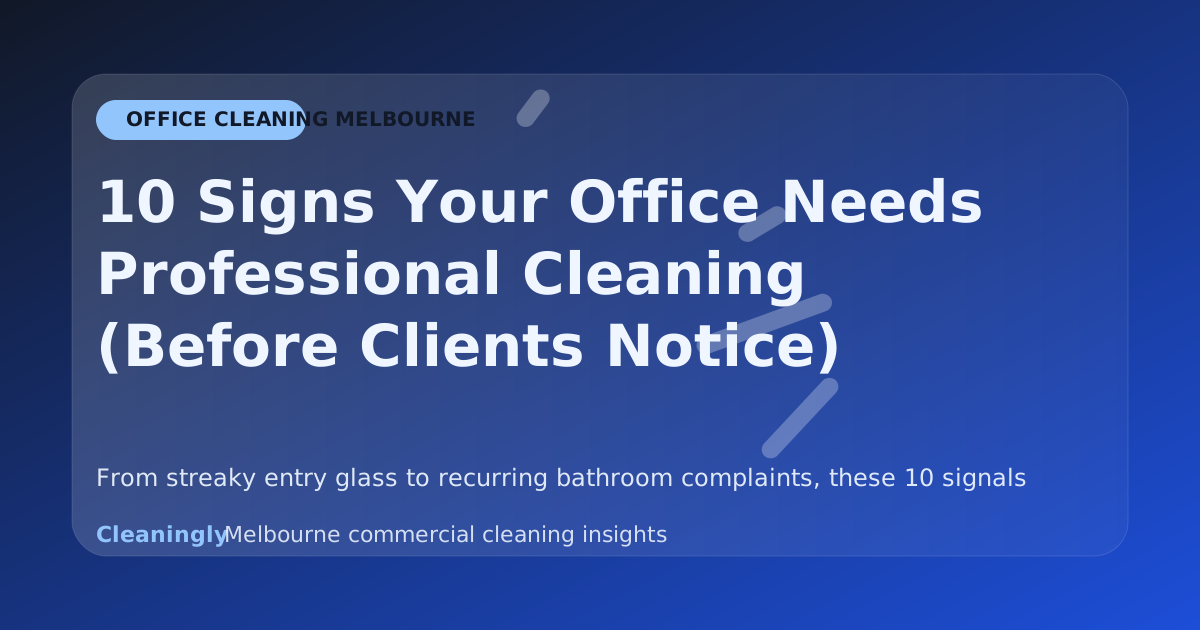
If you manage an office in Melbourne, the fastest way to stay ahead is to watch for early signals and fix the system before complaints escalate. Use the checklist below to identify what is slipping and whether you need a more structured professional office cleaning scope.
10 signs your office cleaning is falling behind
- Entry glass, door handles, or reception counters look smudged by mid-morning
- Bathrooms smell clean only right after a clean, then degrade quickly
- Kitchen benches and sinks accumulate residue despite “regular cleaning”
- Bins overflow or liners are missed in high-use areas
- Meeting rooms show fingerprints, dust, or dirty tables after bookings
- Floors look dull, sticky, or visibly tracked in high-traffic lanes
- Desk clusters collect dust and debris around edges and power points
- Consumables (soap, paper towel, toilet paper) run out unexpectedly
- You get recurring internal complaints about the same areas
- A client or visitor makes a comment about cleanliness—directly or indirectly
Why these signs matter (beyond “looking nice”)
Presentation is a business signal. If your entry and amenities feel unmanaged, visitors assume other parts of the operation are also unmanaged. Internally, slipping hygiene increases friction: more staff time spent wiping, more “someone should clean this” moments, and lower confidence in shared spaces.
What to do when you spot one or two signs
When the issue is small, the fix is usually simple: adjust frequency, tighten the checklist, and clarify ownership. For example, if meeting rooms are consistently missed, it often means the cleaning visit time is under-scoped for the number of rooms and bookings.
- Clarify which areas are “every visit” versus “weekly rotation” tasks
- Increase touchpoint cleaning in reception, meeting rooms, and shared tech
- Add a mid-week reset for kitchens and bathrooms if traffic is high
- Track the top 3 complaint areas and verify they improve within 2–3 visits
When it is time to bring in professional office cleaning
If multiple signs are present, or the same issues keep returning, the problem is rarely effort. It is usually the system: unclear scope, inconsistent time on site, or no quality control loop. Professional cleaning is most valuable when it stabilises standards—not when it is used as a one-off rescue.
A simple “minimum viable” weekly scope for many offices
- Every visit: bathrooms, kitchen surfaces, bins, vacuum/mop high-traffic lanes
- Every visit: touchpoints (handles, switches) in reception and meeting rooms
- Weekly rotation: glass detail, skirtings, edges, and spot wall marks
- Periodic: deep bathroom detail, carpet maintenance, floor machine work as needed
Conclusion: don’t wait for the client comment
If you are seeing early warning signs, treat it as a scheduling and scope problem—not a motivation problem. The right frequency, checklist discipline, and verification loop are what keep an office consistently client-ready.
Take the next step
Get a structured cleaning plan designed for your site, risk profile, and service level.
Prefer to call? 0480 039 477